
32.jpg)


56.jpg)


Kajal®

Kajal® is defined as a robust technological solution specifically developed for the planning of logistics, production, and transport processes through the efficient management of supply chains. Its operational core is founded on knowledge extraction algorithms that process large volumes of historical data (stock fluctuations, logistics KPIs, etc.) to generate high-value predictive insights. This tool enables organizations to transition from a reactive to a proactive model in decision-making. Thanks to its modular and scalable design, Kajal® guarantees seamless integration into diverse business ecosystems, offering customization that ensures compliance with the specific requirements of each industrial or commercial sector.

Kajal®: A Robust Solution for Supply Chain Planning
Kajal® is defined as a robust technological solution developed specifically for the planning of logistics, production, and transportation processes through the efficient management of supply chains.
Its operational core is based on proprietary Knowledge Extraction algorithms that process large volumes of historical data (stock fluctuations, logistics KPIs, etc.) to generate high-value predictive insights. This tool enables organizations to transition from a reactive to a proactive, data-driven decision model.
Thanks to its modular and scalable design, Kajal® ensures seamless integration into diverse enterprise ecosystems. It offers a level of customization that guarantees compliance with the specific requirements of any industrial or commercial sector.
Kajal® Modules
The solution comprises the following specialized modules:
Kajal Forecasting
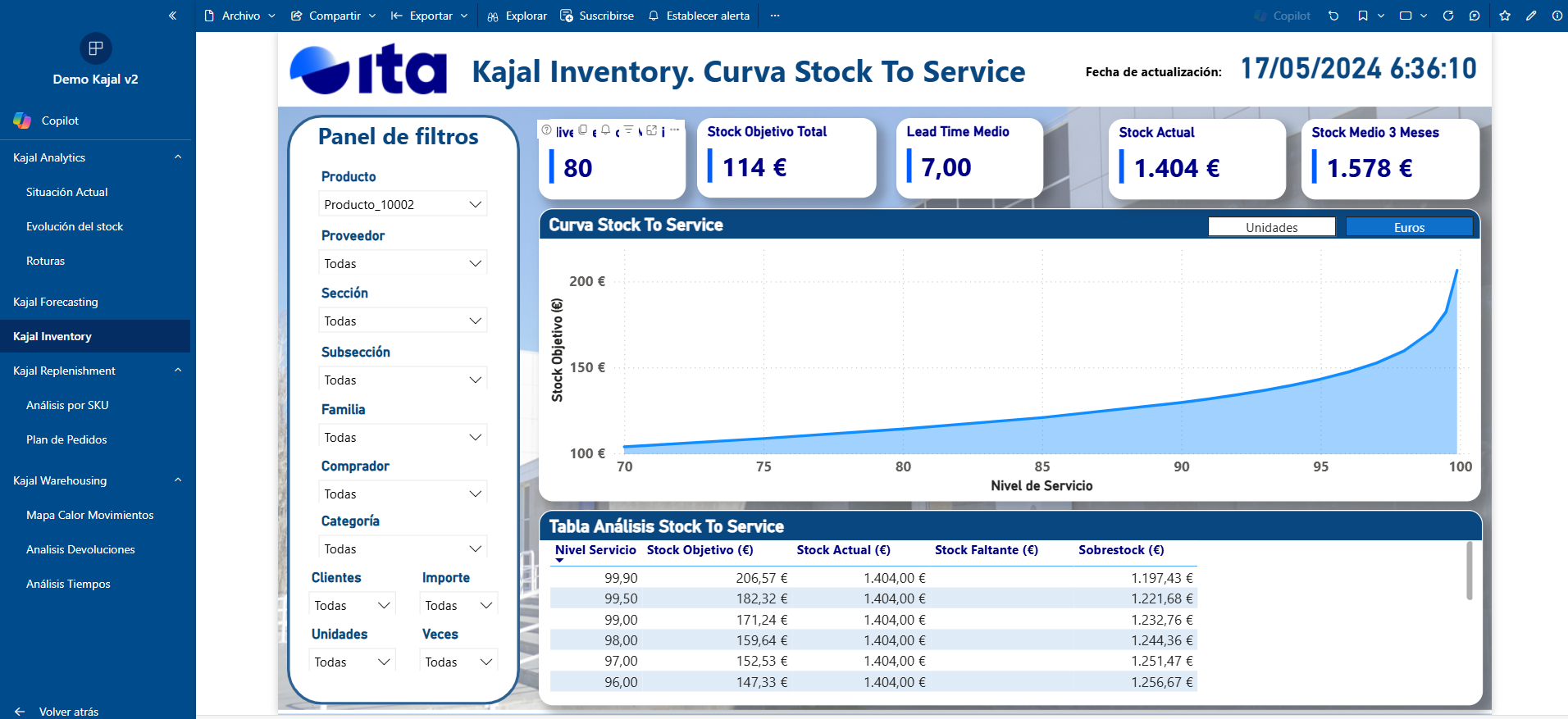
Kajal Inventory
Kajal Replenishment
Kajal Production
Kajal Scheduling
Kajal Routing
Key Functionalities
Data Mining and Machine Learning Models: Implementation of predictive algorithms and knowledge extraction techniques. These analyze time series of historical demand data, stock variations, and other factors.
Multidimensional and Contextual Analysis: Advanced data processing to correlate internal factors (production KPIs, inventory movements) with external factors (seasonality, market trends).
Scalable and Parametric Architecture: Modular design ensuring non-intrusive integration with existing management systems. It offers the flexibility necessary for rapid reconfiguration according to specific sector dynamics.
Insight Generation: Automated conversion of analytical results into strategic recommendations for sourcing and organizational activity scheduling.
Competitive Advantages
Maximization of Return on Capital (ROC): Surgical optimization of inventory levels, directly resulting in the release of tied-up working capital.
Mitigation of Operational Risks: Early detection of the probability of stock-outs or inventory excess, allowing for preventive adjustments and reducing opportunity and obsolescence costs.
Value Chain Synchronization: Predictive alignment between procurement, logistics, and production planning to ensure operational continuity.
Data-Driven Decision Support: Establishes a rigorous analytical framework for decision-making, ensuring that sourcing strategies are grounded in evidence and statistical projection.