

32.jpg)


56.jpg)


Sustainable Electrochemical PFAS Destruction GRAPHEC

Our research led to the development of a new class of 3D graphene-based electrochemical electrodes capable of efficiently destroying PFAS and other persistent contaminants directly in water. By engineering a highly porous, conductive, and chemically robust material, we achieved fast mass transfer, high electrocatalytic activity, and complete mineralization pathways under low-energy conditions, without generating toxic byproducts. This breakthrough enables on-site degradation of contaminants that were previously considered nearly impossible to remove, forming the scientific foundation of GRAPHEC’s advanced treatment systems.
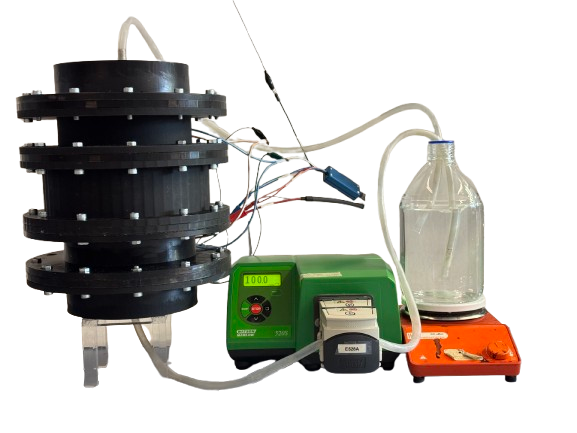

The prototype is designed as a compact and modular electrochemical treatment unit that enables the on-site destruction of PFAS and other persistent organic pollutants in contaminated water streams. Its purpose is to be integrated directly into existing industrial treatment lines, remediation systems, laboratory workflows, or decentralized water treatment applications. By eliminating persistent contaminants like PFAS at the source, the system helps users avoid expensive off-site disposal, reduce long-term environmental liabilities, and comply with increasingly strict regulations.
In practical terms, the unit allows for the continuous treatment of complex water matrices such as industrial effluents, landfill leachates, concentrated brines, and wastewater treatment concentrates. Thanks to the robustness and high efficiency of the 3D graphene-based electrodes, the system requires minimal maintenance while ensuring stable and reliable operation. The prototype also includes integrated sensors and control electronics, enabling real-time monitoring of performance and treatment efficiency.
Overall, the product demonstrates a scalable, energy-efficient, and safe solution for industries and sectors where the destruction of PFAS and other persistent pollutants is essential, including the semiconductor industry, chemical production, environmental remediation companies, waste management facilities, aviation, and healthcare environments.
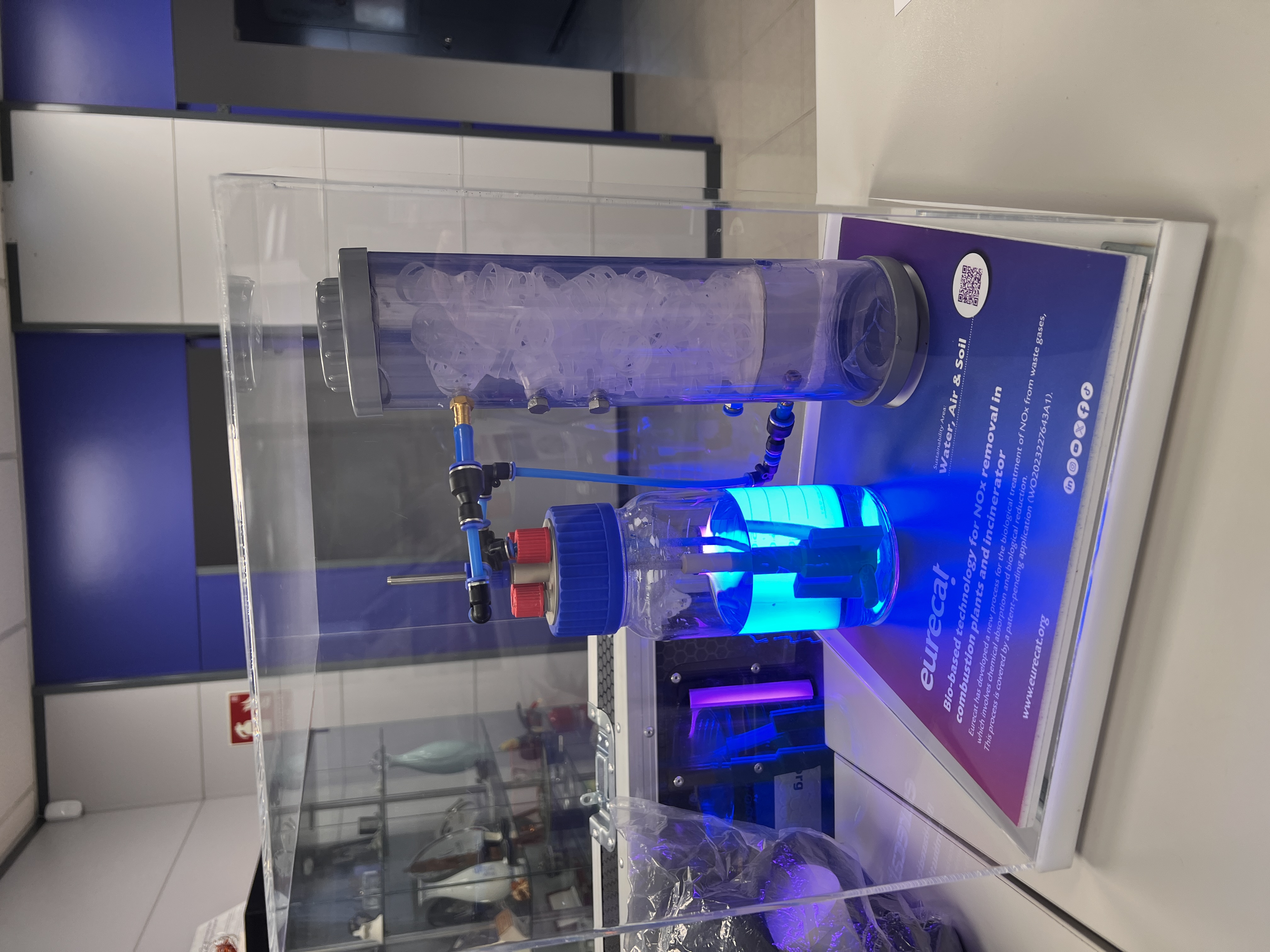
NOx capture and biorremediation technology

LITecS Monitoring Station
